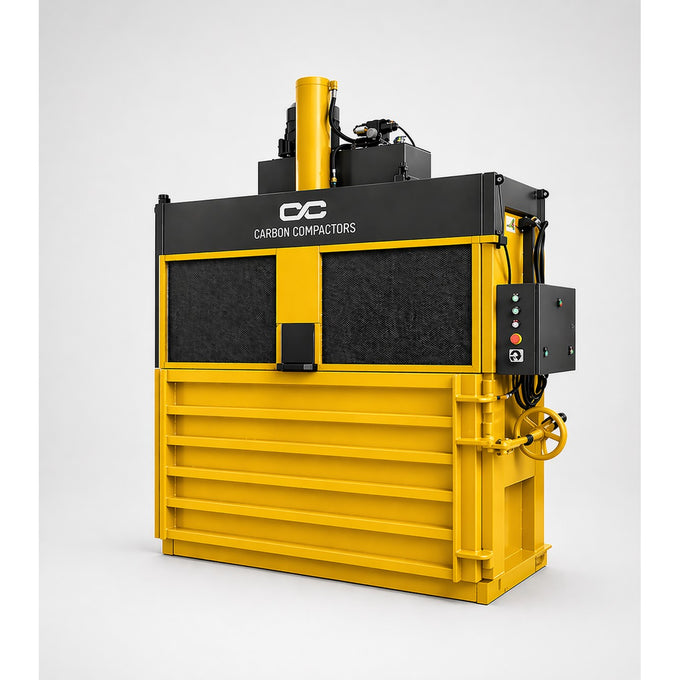
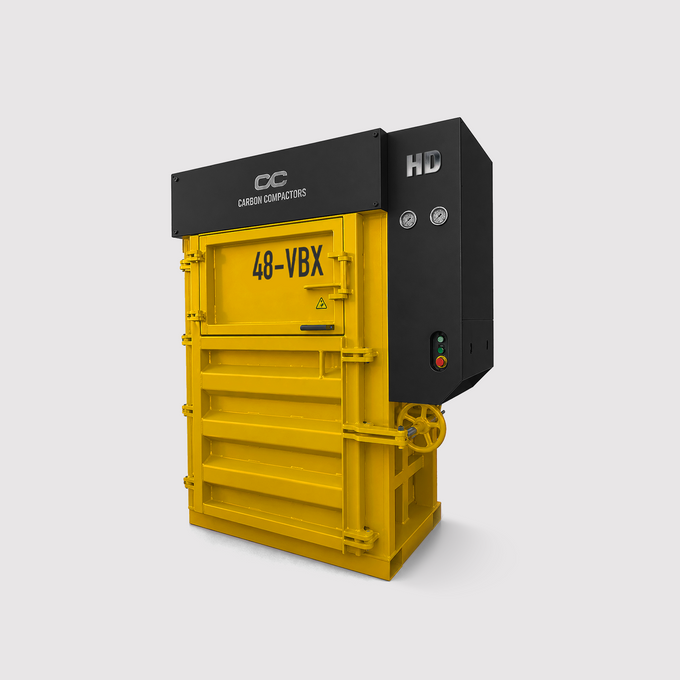
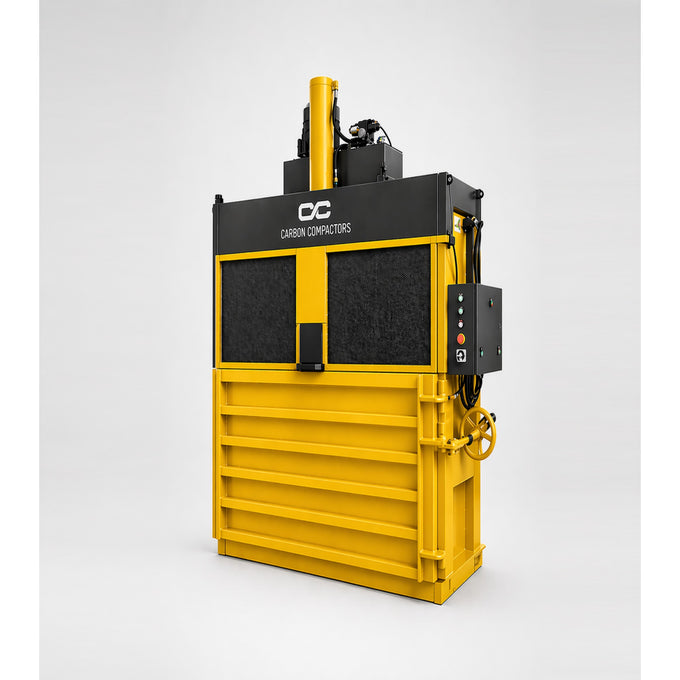
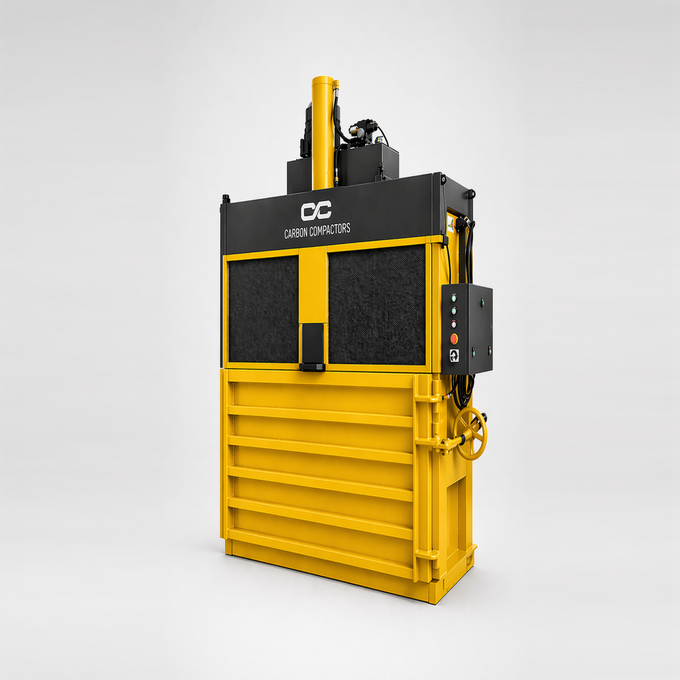
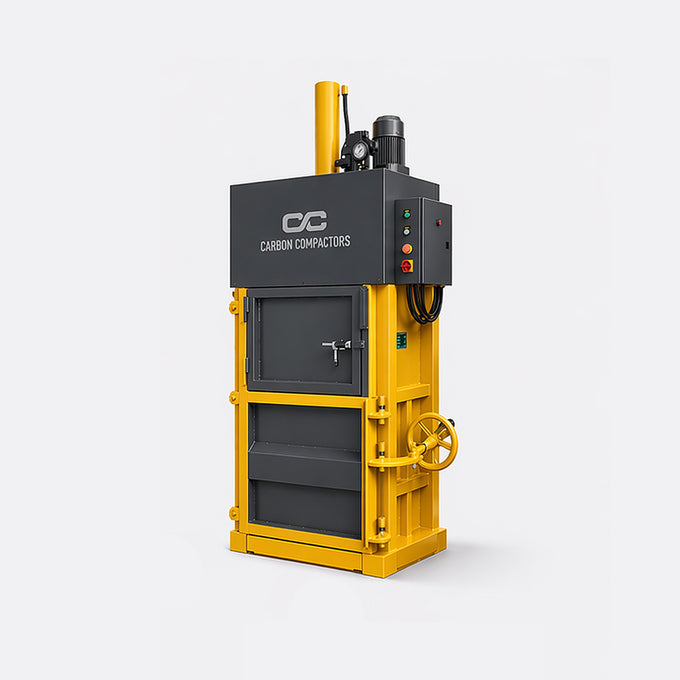
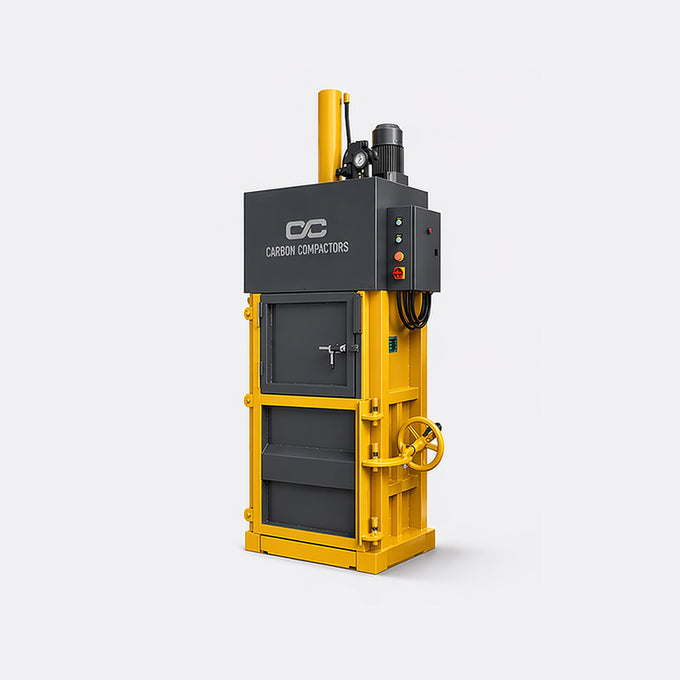
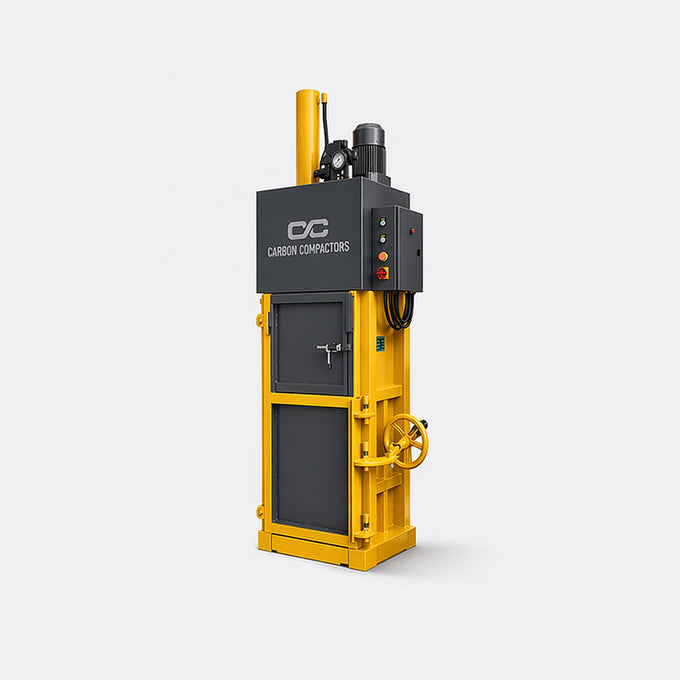
Cardboard piling up faster than your hauler will take it away? A vertical baler ends that. It presses loose OCC (old corrugated cardboard) into tight, wire-tied bales a forklift can move and a recycler will pay for. One day's pile of boxes becomes one 1,000-lb bale on one pallet. We build seven models, from a 24-inch feed opening up to 72 inches, and ship them factory-direct, CE-certified. Same machine class as a Bramidan, BACE, or PTR, without the dealer markup or the six-week quote runaround.
Vertical or horizontal?
For almost everyone, vertical is the answer. A vertical (downstroke) baler loads from the front, presses down, and ties off by hand. It's simple, it's compact, and it's sized for the cardboard one shift actually makes. Horizontal balers are a different animal: auto-fed, auto-tie conveyor machines for recycling plants and distribution hubs moving tons an hour. They cost five to twenty times more and eat the floor space to match. Store, restaurant, warehouse, plant? Buy vertical. The full comparison is in the guide below.
How a cardboard baler works
Four steps, about a minute per cycle:
1
Load
Flattened or whole boxes drop into the front-loading chamber.
2
Compress
The hydraulic ram drives down, packing the cardboard at roughly 10 to 1.
3
Tie
Thread bale wire through the channels and tie the finished bale off by hand.
4
Eject
The bale tips out onto a pallet, ready to stack, store, or sell.
What drops out is a mill-size bale, about 30" × 42" × 48" and 1,000 pounds, so recyclers take it without a fuss and a single pallet holds a day's waste. The whole machine sits in a footprint about the size of a phone booth.
What you can bale (and what you can't)
Cardboard and corrugated boxes are the everyday job. Most shops also feed in paper, chipboard, and clean plastic film. Keep wet, greasy, food-soaked, or hazardous material out of it. That junk ruins the bale, and the mill docks you for contamination. You don't even need to break boxes down first. The ram crushes them whole; you just fit fewer per stroke.
Is a cardboard baler worth it?
Pull your last hauling invoice and do the math. The savings aren't in selling bales, they're in not paying to haul air. Loose cardboard is mostly empty space, so a half-full dumpster still costs you a full pickup. Baling shrinks that volume by about 90%, which usually drops pickups from a few times a week to once or twice a month. Most customers cut their hauling spend by 60% or more. A grocery store breaking down 40 boxes a day goes from a daily overflowing dumpster to two tidy bales a week, and the mill check for those bales ($50 to $180 a ton) lands on top. A small baler usually pays for itself inside a year.
Sizing, power, and install
Match the feed opening to the boxes you break down, and the model to your weekly volume — that's how American operators actually shop, not by press tonnage. Weigh one day of cardboard and multiply by five. The 24-inch models (the Carbon 24-VB and 24-VBHD) run off a standard 120V outlet, so a shop or restaurant can plug one in without hiring an electrician. From the 32-inch up, you'll want three-phase power for the throughput a warehouse or plant pushes. One non-negotiable: every vertical baler has to be bolted down. Four 3/4" anchors into a 3,000-psi concrete slab keep the ram from walking the machine mid-cycle. Sort that out before delivery day.